How to create multi-million pound academy players
Southampton Football Club has long been famed for its academy production. One man can claim to be the catalyst behind its emergence.
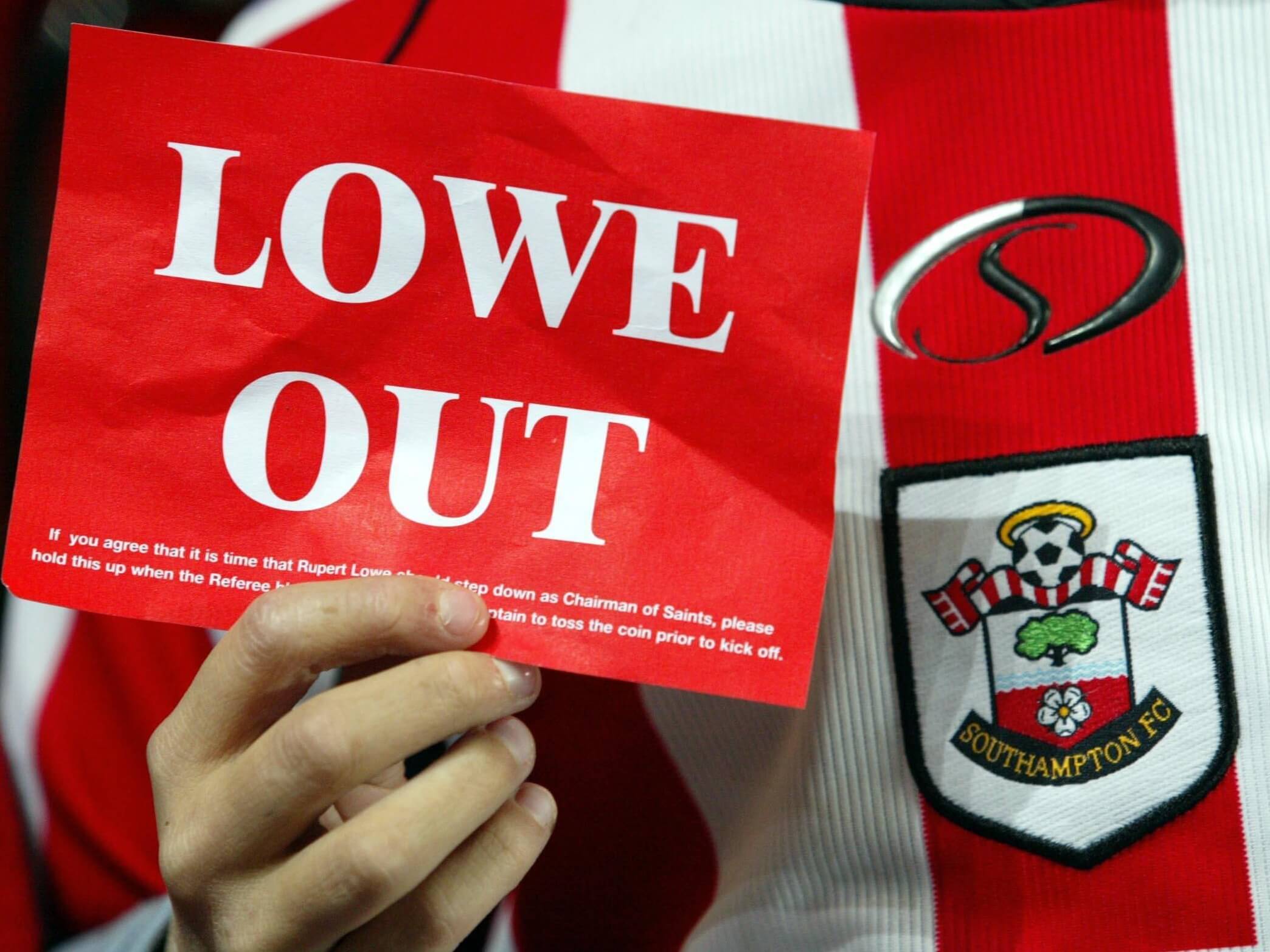
INVOLVED: Rupert Lowe took a hands on approach to the first-team when he joined Southampton.
Southampton Football Club's academy has been one of the most productive in English Football. Multi-million-pound players like Gareth Bale, Alex Oxlade-Chamberlain and Adam Lallana all came through the Staplewood Campus. One man's vision, confidence & conviction built the foundations for these players to become stars of the game, ex-Southampton chairman Rupert Lowe.
The beginning
Lowe became involved with Southampton in 1996. It was his initial objective to be involved with the day-to-day running of the club. He was working for Southampton Leisure Holdings who did a reverse takeover of the football club. He was just going to be the chairman of the holdings company to fund the building of Southampton's new stadium, St Mary's. Four months later, Southampton were on the brink of relegation. With seven games left to play, Lowe was drafted in to help with the football club as well.
Unlike most chairmen, Lowe took a hands-on approach. For the last seven games, he went into the changing room and effectively told them what was on the line: "I went in and I said to the players, I'm coming to every game and I'm coming to the dressing room. You know, there are millions of people in the south of England who appear to care more deeply than you do about whether or not the club stays in the Premier League."
I went in and I said to the players, I'm coming to every game and I'm coming to the dressing room
Former Southampton Chairman
-
Rupert Lowe to football4football
Southampton ended up getting 14 points from the final seven games and stayed in the Premier League. Despite this great achievement, things suddenly got a lot harder for the chairman. Head coach Graeme Souness resigned, and Lawrie McMenemy resigned as Director of Football. Both men publicly denounced the new ownership in the press.
The following season started poorly, with the team picking up just one point from the first 10 games. The ownership was receiving constant abuse from the stands, and the whole situation looked bleak. After beating Liverpool at Anfield, things turned around. Southampton achieved a mid-table finish and had something to build on.
The academy
It's difficult for normal-sized clubs to successfully fund both the first team and the academy effectively. Most teams outside the elite have to choose which path they want to go down. Lowe realised that he simply couldn't afford to buy the players needed to take Southampton further up the Premier League. He decided he didn't just want to enhance Southampton, he wanted to help English football as a whole.
I set up Southampton academy
Ex- Southampton Chairman
-
Rupert Lowe
Lowe states Graeme Souness had effectively shut the Southampton academy down, which gave him a chance to structure it exactly as he wanted with a re-build. Because of the unpredictable nature of first-team football, Lowe insisted coaches in the academy would report to him rather than the first-team manager. Creating a clear separation of the two parts of the club would allow the first manager to focus on his role and for the academy to develop unrestricted.
The thinking behind this was that if you separate the two, you lessen the risk of that first-team manager leaving the club and taking all his coaching staff with him. It was about having continuity for the academy players. The manager could dip into the academy when a talented player was ready, but the staff stayed in place

Insights
Southampton: Can modern clubs be run in this unique way ever again?
Relationship with fans
From the outside looking in, most football fans would assume that Rupert Lowe should've been popular with the Southampton fan base. He is responsible for bringing through a golden generation of player for the club. Many were sold for huge transfer fees that helped cement Southampton as a regular Premier League side. For some reason, this isn't the case, and Lowe isn't quite sure why.
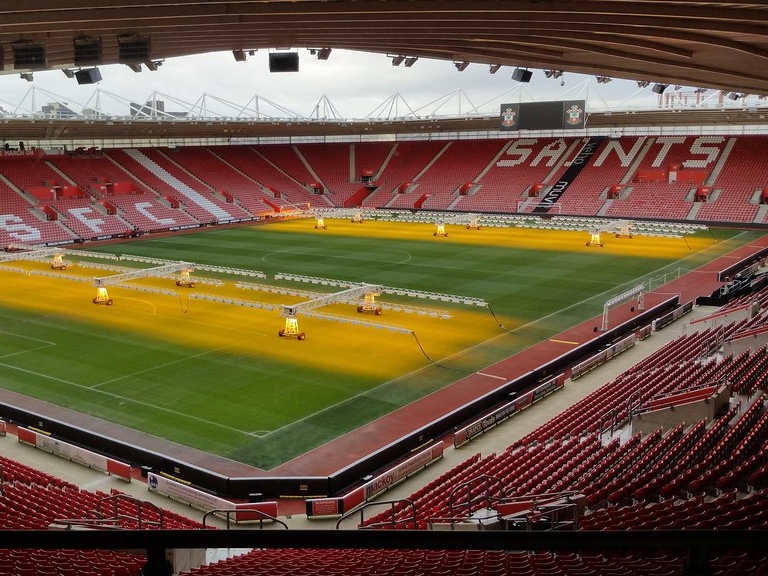
According to Rupert Lowe, Southampton have an excellent modern stadium in St. Mary's that allowed them to be a modern Premier League club, and a brilliant academy set up by him.
Academy graduates during Lowe's time
1. Theo Walcott (Debut aged 16 years, 143 days)
2. Alex Oxlade-Chamberlain (Debut aged 16 years, 199 days)
3. Luke Shaw (Debut aged 16 years, 250 days)
4. Gareth Bale (Debut aged 16 years, 275 days)
5. James Ward Prowse (Debut aged 16 years, 358 days)
6. Calum Chambers (Debut aged 17 years, 220 days)
7. Jack Stephens (Debut aged 17 years, 345 days)
8. Wayne Bridge (Debut aged 18 years, 11 days)
9. Adam Lallana (Debut aged 18 years, 75 days)
10. Andrew Surman (Debut for Walsall aged 18 years, 175 days)
Despite this, Lowe believes the British sports media are responsible for his bad image. He wasn't interested in ever speaking to the press, and didn't spend any money on PR. He thinks the press effectively brainwashed Southampton supporters into acting against their own interests and chanting abuse at a man who was doing great things for the football club.
This constant abuse was part of what led Lowe to walk away from the club. As much as he would have liked to finish the project that had been started, it was made increasingly difficult. He was libeled in the media, and also had his phones hacked by newspapers. In terms of the abuse from the stands, Lowe's confusion lies in the fact that he wasn't picking the team. He feels there was always a perfectly good set of players there, it's up to the manager to get results on the pitch.
Creating good people
Part of the philosophy at Southampton academy was to produce young players who are not only great footballers, but great people too. This is something that fills Lowe with pride. He recounts a memory from the 2005 FA Youth Cup Final which Southampton reached. Despite losing the game, the whole team was insistent that the lady who ran the accommodation at the academy be there with them.
Julia Upson was a key factor in the development of Southampton's youngsters. All the players recognised this, and wanted to have photos with her and make sure she was part of the special day. Lowe said of this: "that for me was incredible, the fact that they actually cared that she was there and they looked after it, that was that showed that they were good people. They cared about her. They respected what she'd done for them."
Future vision
What's very unusual about Lowe's time at Southampton is that they didn't continue producing players in the same way. It seems almost illogical, but they don't produce anywhere close to the number of quality players as they did during Lowe's tenure.
If you actually look at the results that we achieved in Southampton, you look at the players that came through the academy, you sort of think that somebody would follow your example. But do they? No.
Ex- Southampton Chairman
-
Rupert Lowe
It seems that Southampton has now gone down the route that many teams do nowadays. The finances and efforts are focused primarily on the first-team to ensure Premier League status. James Ward-Prowse and Jack Stephens are now the only regulars in the side who came through the academy.
They seem to buy talented players for low transfer fees who are developed in the first-team, and sold on for huge amounts of money. Players like Virgil Van Dijk and Sadio Mane were brought for £11.5 million and £10 million respectively, but sold for a combined total of £109 million. This is still a credible way of running a football club, but it seems to be detracting from academy production. Perhaps this is symptomatic of the instant gratification that both fans and clubs want in modern football.
Sign of the times?
Does Southampton's change in philosophy hint at the way modern football is going? Academies could start producing players purely for the purpose of future transfer fees, rather than for consistent use in the first team.
Comments
Loading comments…